
The optimization of cell separation methods plays a crucial role for many researchers. Various approaches exist for sorting different cell types, and the choice of the appropriate method often depends on the cell type or cell subset. One of the faster and more cost-effective methods for separating cells based on density is centrifugation.
Density gradient centrifugation
The combination of centrifugation and a specific separation medium with a defined density is referred to as density gradient centrifugation. A detailed description of this method, as well as its application for the enrichment of cells from whole blood, can be found in our article "Density Gradient Centrifugation – A Method for Isolating Cells from Whole Blood".
pluriMate tubes for density gradient centrifugation
pluriMate tubes are specially designed tubes for the rapid and efficient isolation of leukocytes from whole blood samples and a true alternative to Leucosep or SepMate tubes. They are a tool for density gradient centrifugation, enabling a quick and precise separation of leukocytes from other cell populations such as erythrocytes.
Advantages of pluriMate separation tubes for density gradient centrifugation
The barrier in the tube minimizes the mixing of blood and separation medium. Harvesting the supernatant is often achieved by simple decanting instead of careful pipetting.
The separation occurs significantly faster, as the pipetting of the upper cell fraction after centrifugation is simplified.
The built-in insert reduces user errors, resulting in a more uniform cell insulation.
Less cell loss due to the simplified insulation layer.
Less cell loss due to the simplified insulation layer.
pluriMate tubes are designed for various separation media such as Ficoll-Paque, Pancoll, or Lymphoprep.
Replace Sepmate or Leucosep tubes without hesitation with pluriMate tubes.
Variants of our pluriMate separation tubes
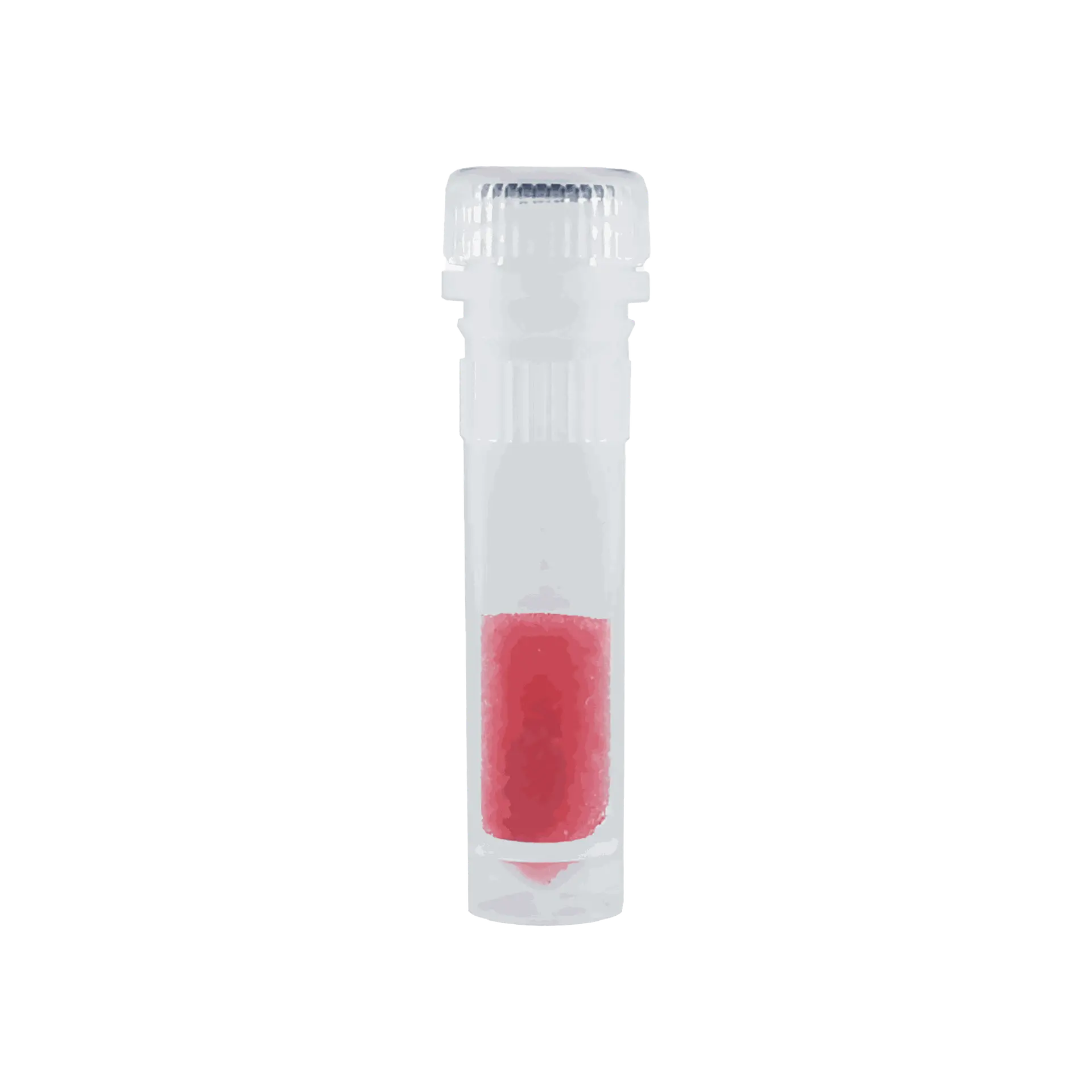
2 ml pluriMate tubes
enable quick and easy isolation of cells. For small sample volumes of 0.25 ml to 1 ml
2 ml pluriMate tubes
ermöglichen eine schnelle und einfache Isolation von Zellen. Für kleine Probenvolumina bis zu 0,25 ml bis 1 ml
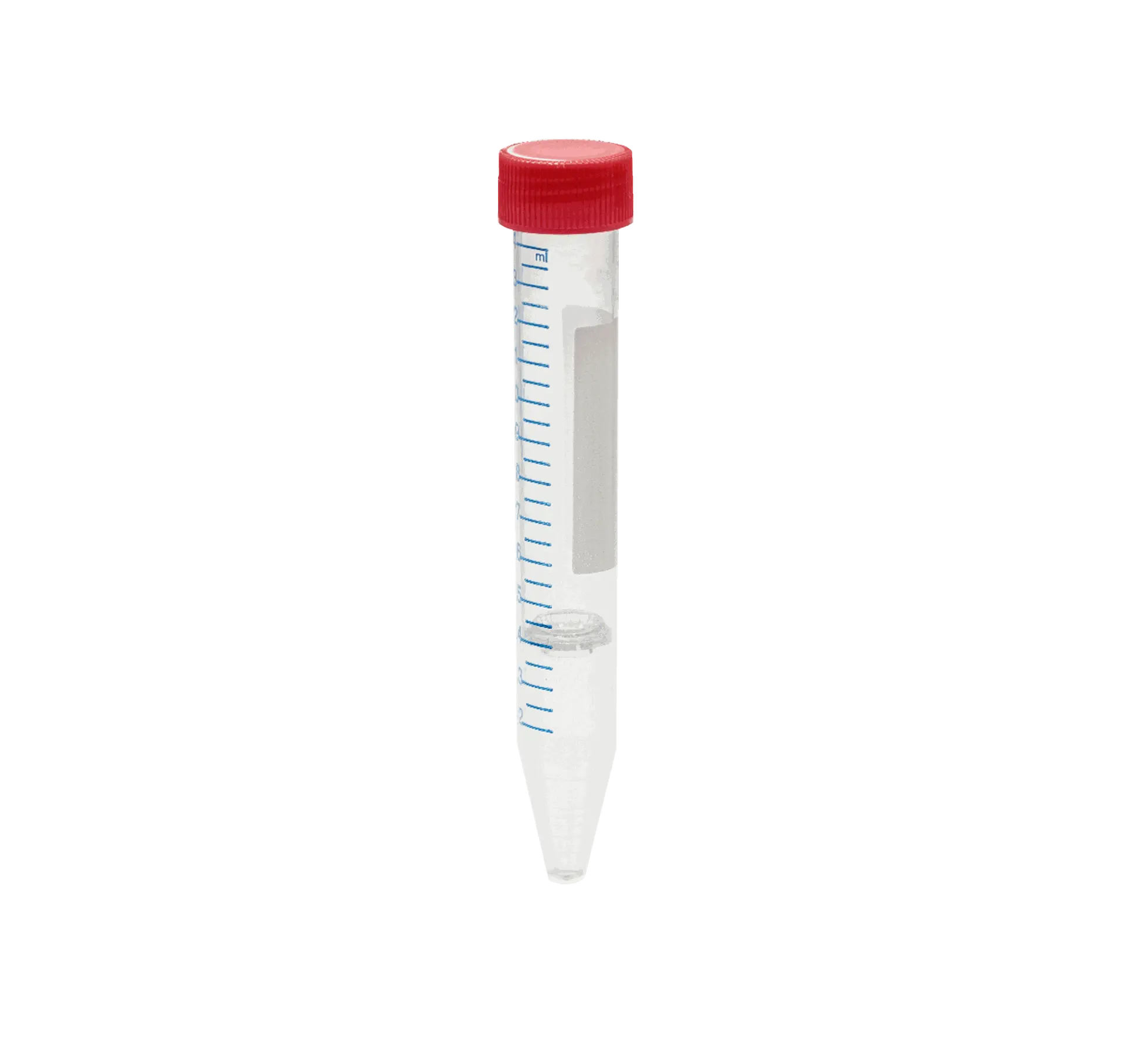
15 ml pluriMate tubes
enable a quick and easy isolation of cells. For sample volumes of 2 to 11 ml.
15 ml pluriMate tubes
ermöglichen eine schnelle und einfache Isolation von Zellen. Für Probenvolumina bis 2 - 11 ml.
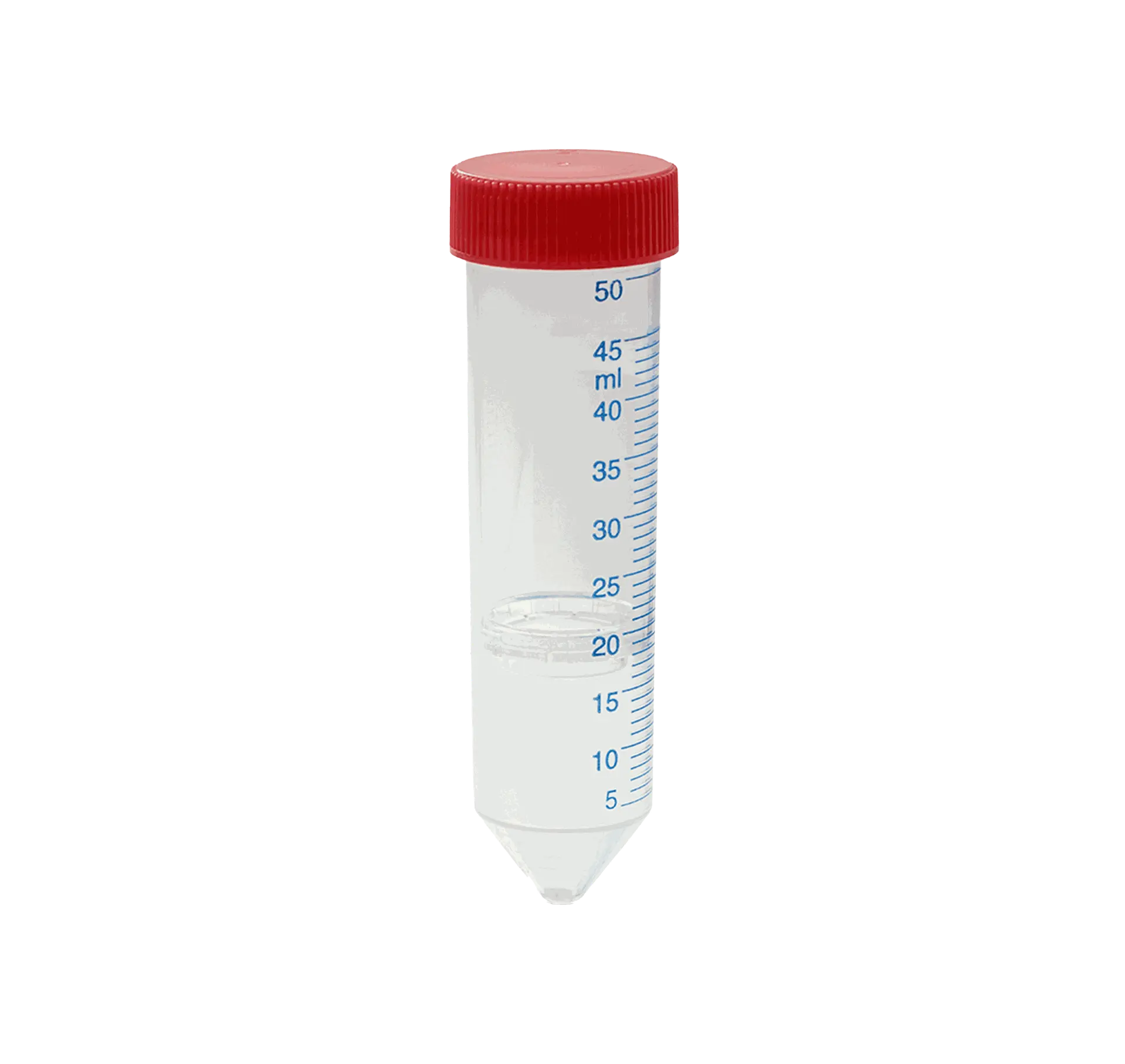
50 ml pluriMate tubes
enable quick and easy isolation of cells. For sample volumes from 5 ml to 30 ml.
pluriMate separation scheme
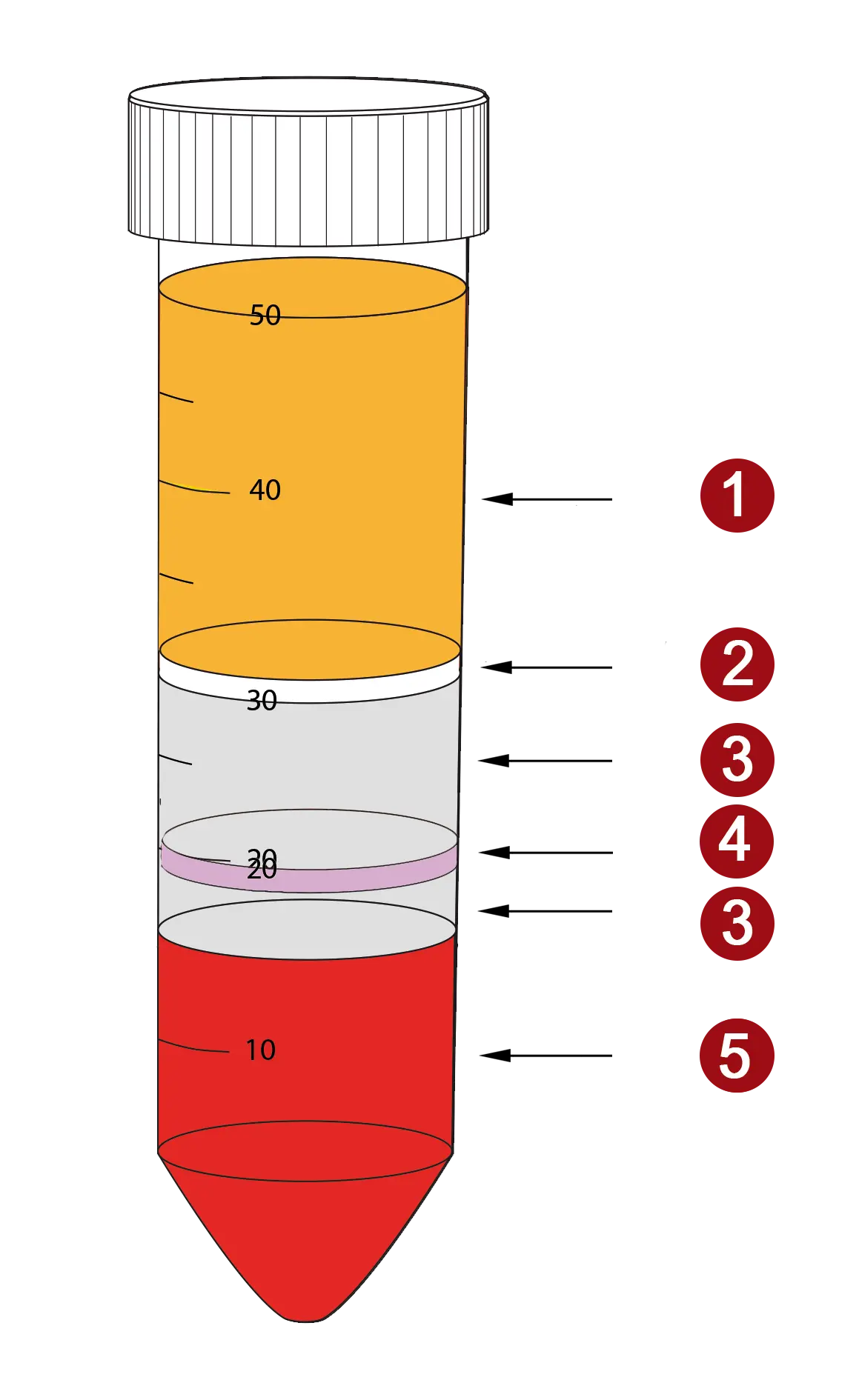
The tubes are filled with a density gradient medium (3) that allows for rapid and reliable isolation of cells (e.g., leukocytes, including lymphocytes and monocytes). The pluriMate barrier (3) prevents the mixing of the density gradient medium (3) with the sample material (1) during sample addition. To work quickly, the sample material can simply be poured into the tube.
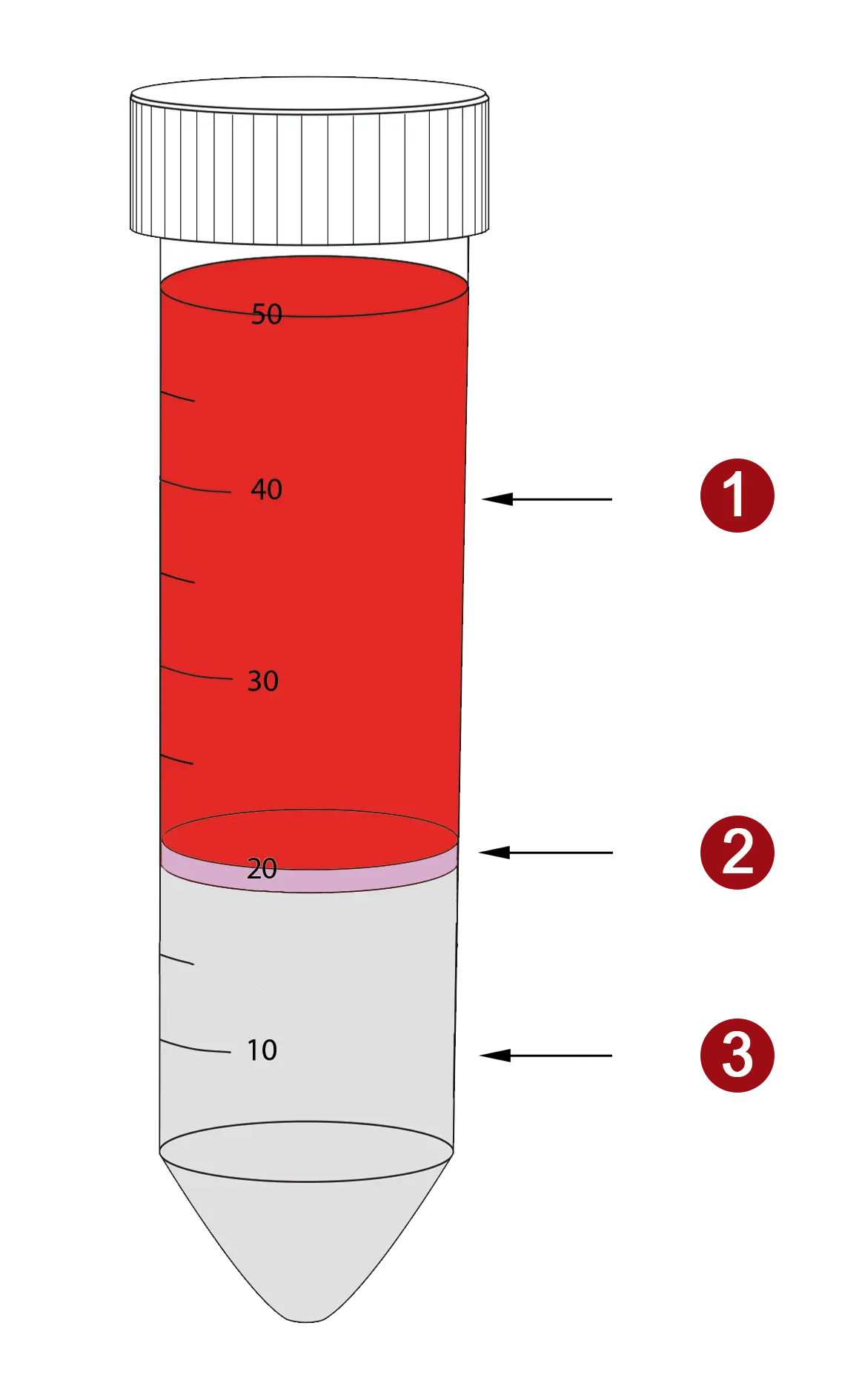
Enriched leukocytes
The procedure is simple: after filling the tube with the blood sample, centrifugation takes place. Due to the different densities of the various blood cells, the sample separates into different layers in the tube. The leukocytes collect at the designated separation zone, allowing them to be easily removed and used for further examinations or applications.
Summary
pluriMate tubes offer a time-saving and user-friendly solution that does not require additional steps such as manual separation or the use of special antibodies. They ensure a high purity of the isolated leukocytes and are particularly suitable for applications in immunology, cell research and diagnostics. The ease of use and speed of performance make the pluriMate tubes a valuable tool for laboratories that regularly perform cell separations.